Reviews | Photos
![]() |
||
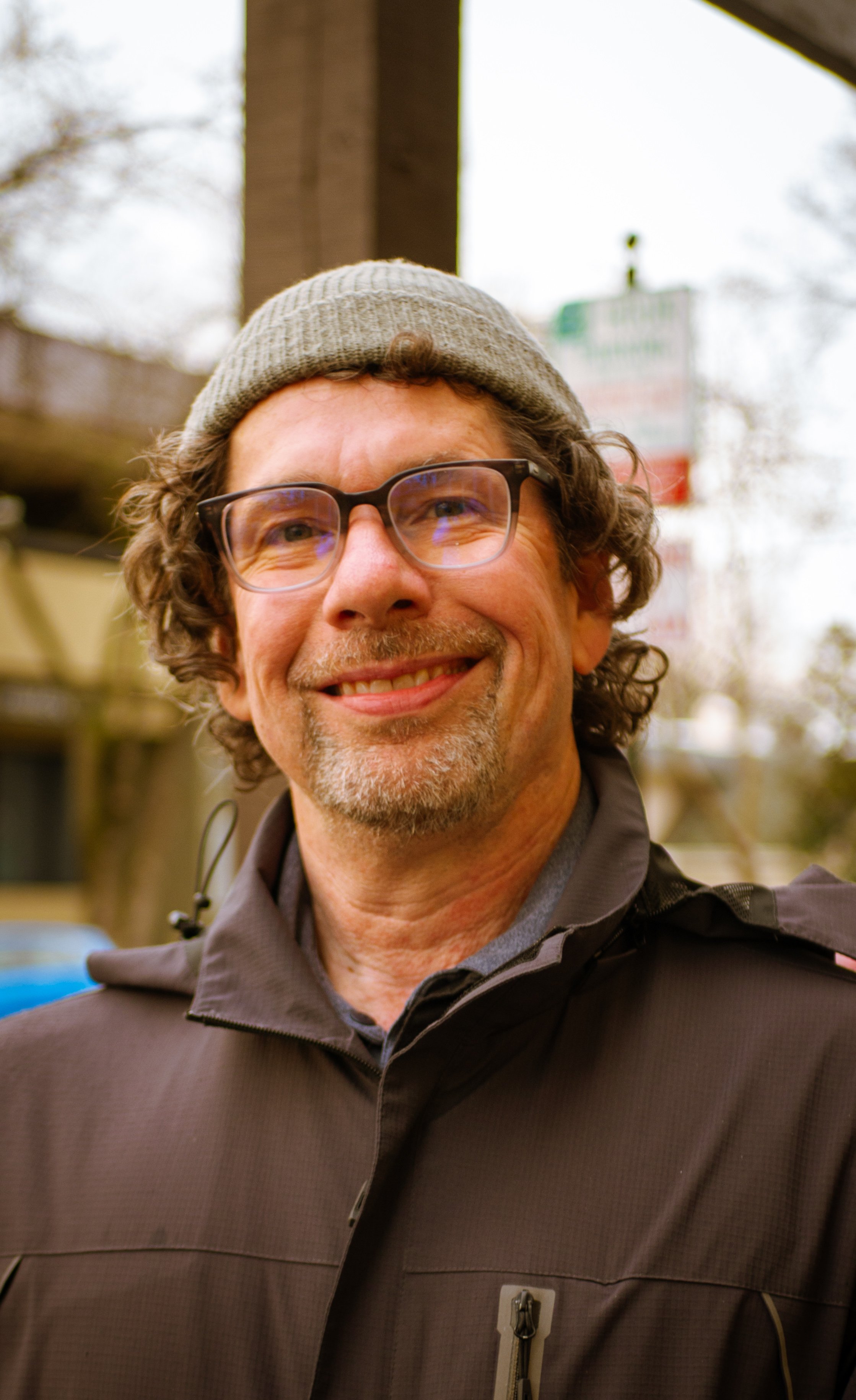
| Kurt Rohde | Photo by Heward Ju | |
Reviews for Bitter Harvest:
Contra Costa Times
ArtsSF.com
San Francisco Classical Voice
Charles Shere, former music critic for the Oakland Tribune
The New York Times: An Anniversary With a Forward Look
The Los Angeles Times: Bach, a man in touch with today
San Francisco Classical Voice: Impressive Premiere, Sharp Standards
San Francisco Classical Voice: Hits and Misses
San Francisco Classical Voice
The Gramophone
Symphony Magazine
San Jose Mercury News
San Francisco Classical Voice
Santa Barbara News Press
Chicago Sun Times
Los Angeles Times
New York Times
San Francisco Classical Voice
20th Century Music Magazine
San Francisco Classical Voice
ArtsSF.com
San Francisco Classical Voice
Andante.com
Berkeley Daily Planet
San Francisco Classical Voice
May 25, 2010
by Janos Gereben
From Rome, With Love and Music
Says San Francisco composer Kurt Rohde of his Concertino, which will receive its world premiere June 3 (in Mill Valley) and June 7 (in San Francisco) with the Left Coast Chamber Ensemble:
“Just completed, this is the last piece I began in Rome. There is an odd tinge of sadness and closure about the fact that all the music I began in Rome is now finished, that the year there really is over, and whatever changes happened to me while in Rome are up to me to maintain and nurture at this point.”
Along with Rohde Rohde, the violist/founder of the Left Coast Chamber Ensemble, and a prolific composer, two more San Francisco musicians have been benefiting from artistic residence in Rome. While Rohde’s Rome Prize stay recently concluded, San Francisco–raised composer, Lisa Bielawa, who now lives in New York, is a current Rome Prize winner; and ODC Dance Company founder/artistic director/choreographer Brenda Way. Brenda Way was a Resident in the Arts, and served as a senior advisor to the Rome Prize winners, including Rohde.
Rohde recalls his “Rome pledge”:
“I made a promise to myself when I went to Rome that I would write only pieces I wanted to write; that I would be brave and do things in the music I had been wanting to do for some time, but was too preoccupied and distracted by concerns of what people might think. Also, I wanted to compose works that were more collaborative and less tied to traditional genres. All in all, I did what I wanted and set out to do, and it was definitely for the best.”
Rohde describes the Concertino for Violin and Small Ensemble as “an odd piece.” It contains a virtuosic, solo violin part, and the ensemble writing is highly intricate and interrelated throughout. While not a full-fledged violin concerto, there is no doubt that the solo violin is the heart of the piece. It is dedicated to Axel Strauss, whom the composer calls “fiercely patient while awaiting a piece from me over the last five years,” who is also the soloist.
Cast in three movements, the Concertino is “modeled on the Baroque concerto grosso technique. In these early ensemble works, the concertino was a subset of solo instruments drawn from a larger ensemble. They would play elaborate versions of the full ensemble’s music, and the solo sections would alternate with the full ensemble (ripieno) passages, giving an impression of the grandiose and public alternating with the intimate and private.” Says Rohde: “In my piece, there are never any ripieno passages: It is all concertino.”
Brenda Way collaborated with Rohde on the composer’s major project during the Rome residence: a puppet theater work, based on the myth of the founding of Rome by the brothers Romulus and Remus. “We spent a huge number of hours in rehearsal, and I have every intention of working with Kurt back in San Francisco — his work is wonderful,” she says.
Reached in Hanoi last month, on a U.S. State Department tour of concerts, Rohde said the Rome residence gave him a big break:
“… not having to work and keep all the plates spinning atop the numerous poles; not having to keep track or to portion a part of my brain to multitask all the time in order to be on time, to schedule this and that, be prepared, plan ahead, execute, and constantly be moving, moving, moving…”
“Rome does not move. It accumulates: Some things stay longer than others, some things disappear entirely; it spins in place. It has a lot of motion, but goes almost nowhere. I really loved it and was frustrated by it; it is so not Berlin (which I love to the point of wanting to live there).” [Rohde had a Berlin residence in 2003.]
“By the time I was getting ready to leave Rome, I knew that if I stayed there much longer, I would not be able to get back to S.F. It was getting under my skin in a way I did not anticipate. In part, I am sure, that was because the American Academy is such a tremendous and accommodating resource for those who go there to work. And my term there was filled with the most lovely, remarkable people, all of whom I have come to adore and respect without reservation. My time there was the gift of a lifetime, and gratitude does not begin to express my feelings about it all, even now, nearly half a year after the fact.”
What did Rohde accomplish during the Rome residency?
“I went to Rome with one goal — to do things with my music I had never done before, either because I was too frightened to do them back in my home environment or had not had the time to execute them in the way I would have liked, given my limited time, energy, and resources here back at home. I am happy to report that the year was a huge success all around. I composed my puppet theater piece, have ideas for a full-length puppet opera, and composed a piece for a speaking pianist, a large ensemble work, and part of the Concertino.”
That’s a lot of inspiration and unblocked creativity. No wonder artists have been making the trip to Rome for centuries.
ArtsSF.com
September 19, 2008, Vol. 11, No. 10
by Paul Hertelendy
Auf Wiedersehen, Maestro
BERKELEY—Love was in the air this week, and it was palpable. But how will things look in the cold reality of the morning after?
After 30 years, Music Director Kent Nagano took his leave Sept. 18, conducting his final Berkeley Symphony concert with a curiously conventional Mozart-Bruckner program before a large Zellerbach Hall crowd. He had brought the struggling symphony (begun in 1969) out of the backwaters and turned it into a vital and fully professional force, with more new music in a year than most orchestras produce in a decade or three. He will hereafter only return for a few concerts with the Berkeley Symphony’s elite “Akademie” chamber-orchestra offshoot, coming next in May.
There was even a five-minute world premiere, played at the end as if an encore. Former orchestra member and composer Kurt Rohde, 42, created Bis Bald (”Till Soon”) in Nagano’s honor. It’s a jagged fanfare of great complexity, full of brief outbursts and what, in the old sense of the word, were called ejaculations. It ends in a subtle fadeout, as if watching a ship recede toward the horizon. But before that, there were thematic elements like subatomic particles bombarding a cyclotron target helter-skelter at almost the speed of light. How very Berkeley!
San Francisco Classical Voice
September 8, 2008
by Benjamin Frandzel
Nagano Bows Out
One of the Bay Area’s most remarkable musical partnerships marked its ending on Thursday night at Zellerbach Hall. After 30 years of shared artistic growth, the Berkeley Symphony offered its final concert with Kent Nagano at the helm as music director. With the rest of the orchestra’s season given over to guest conductors auditioning for the job, this was Nagano’s final bow in the role, though he’ll be back to lead the orchestra’s new Berkeley Akademie chamber concerts next spring.
And there was plenty of music. As always, the program reflected Nagano’s special interests and current areas of focus. On the surface, with big works by Mozart and Bruckner, this seemed a surprisingly traditional bookend for the conductor’s tenure, with the exception of a brief but brilliant premiere. However, the concert proved to be a showcase for Nagano and the orchestra’s strongest traits, with older works sounding fresh and a new work played with verve and commitment.
To mark the event, the orchestra commissioned a new work from Kurt Rohde, Bis Bald (Until soon), an electrifying, five-minute work that ended the program on a high note. This piece generates excitement immediately, with rapid repeated notes, string tremolos, and brief figures scattered throughout the orchestra. The music feels kaleidoscopic while moving forward with tremendous drive, then surprises by dying out with a quiet, open-ended feeling. This was a worthy tribute to a great partnership, and deserves to return in future performances.
San Francisco Chronicle
September 20, 2008
by Joshua Kosman
Nagano takes final Berkeley bow
Thursday’s presentation by the Berkeley Symphony Orchestra was more than just a concert. It was a summation, a farewell, a page-turning event.
For 30 years, Kent Nagano has been standing in front of the orchestra and leading it through performances of everything from Bach to Berlioz to Busoni to, well, the Beatles (who could forget the pseudonymous Paul McCartney opus that showed up one night as an encore?). Now he’s moving on – another maestro, still to be determined, will take over next season – and this concert in Zellerbach Hall was Nagano’s final appearance as music director.
As a parting gift, the orchestra commissioned a superb encore from Kurt Rohde, the San Francisco composer and violist whose music Nagano has championed over the years. Bis Bald (in German, “Until Soon”), which opens with fierce orchestral flurries and then subsides in a wistfully inconclusive ending, is a virtuosic and often beautiful work that says both “See ya” and “Hurry back,” all in the span of five minutes. It was the perfect way to end not only one evening, but a 30-year chapter in the Bay Area’s musical life.
San Jose Mercury News
April 19, 2008
By Richard Scheinin
Composer, quartet “respond” to Bartók
Montalvo concert exudes heat, energy, even danger
Composer Kurt Rohde has written his first string quartet. He calls it “Gravities,” and it gives the impression of elemental Earth forces at work, sucking together his musical materials, tightly binding them in a dark place, then blasting them apart and back toward the light. It feels mysterious and a little dangerous: The music teems with energy and keeps threatening to explode in your face.
The Cypress String Quartet gave the new piece a powerful, concentrated performance Thursday at the Montalvo Arts Center. The small, appreciative audience was seated practically eyeball-to-eyeball with the musicians in the salon-like main hall of the complex’s historic villa. This is the way chamber music should be heard; the heat and impact of the music were inescapable.
Rohde, an affable, low-key storyteller, it turns out, was there to introduce and explain the work, which the Cypress commissioned from him a year ago. Last summer, he went off to southeastern Utah to begin his composing; you can hear the isolation and desolation of the setting in the piece. Also the heat of the place and the sense of being overcome by its inescapable and timeless power.
You can also hear the influence of Bartók. Every year, the Cypress asks a living composer to participate in its “Call and Response” series of commissions. This time, Rohde was asked to “respond” to the “call” of Bartók’s String Quartet No. 6, a darkly psychological, jagged-edged work, composed in 1939, right before Bartók fled Hungarian fascism and moved to the United States.
Rohde quotes here and there from the sixth quartet, but the Bartók influence is largely one of mood: “Gravities” has a sense of dark entrapment about it. The first movement (”Undertow”) begins with a ghostly, long-lined threnody, surging, tugging and growing, textures packing tight then unraveling, split by riptides of rhythm and harmony. In moments of deceptive repose, the harmonies seem trapped in mysterious tide pools, filled with strange bits of glimmering life – hidden bits of beauty with nowhere to go. The second movement (”Doubts”) is dirge-like, entranced (first violinist Cecily Ward played with her eyes closed), struggling for balance. The finale (”Danced”) stacks and balances multiple textures and finally tumbles into a war dance, highly percussive, like Bartók, and filled with fierce bow attacks.
It’s a persuasive piece by Rohde, well-known in Bay Area new-music circles as both composer and violist. And now his reputation is going international: Last week he was named winner of the 2008-09 Elliott Carter Rome Prize, given by the American Academy in Rome. It will take Rohde to Rome for 11 months of “independent artistic pursuit.”
The first half of Thursday’s concert was given over to excerpts of works by Mozart, Dvorák, and Bartók: a movement from light to darkness, all building toward Rohde.
San Francisco Classical Voice
March 18, 2008
By Janos Gereben
Call & Response & Awesome Kids
I’m glad to have the collaborative testimony of Classical Voice colleague Jeff Dunn in his review of the Cypress Quartet’s “Call & Response” concert at Yerba Buena Center on Saturday, because I still find it difficult to believe what happened there.
Arriving at the Forum, I was taken aback by the sight of a full auditorium, full mostly with children. Not “youth” — children, of the 5th- and 6th-grade variety, in addition to a few high school students. Mostly kids, little ones.
Even somebody not of W.C. Field’s disposition couldn’t help wondering: What will they do? What will they do during the performance of the last quartets by Haydn (No. 77) and Bartók (No. 6), and the premiere of Kurt Rohde’s Gravities? Will they fidget, shuffle, cough, sneeze, whisper, slap, kick, text, or just make cell phone calls outright? If they get through the Haydn, what will they do during 35 minutes of the darkest, heaviest, most sorrowful of all Bartók, a Transfigured Night on steroids and without transfiguration?
The kids (and accompanying or independent adults) were spectacularly quiet during the Haydn, there was some coughing during the Rohde (a stunning work, instant classic, but Bartók-like “heavy”) — and that wasn’t the story. During the Bartók — that Bartók, the one with each movement opening mesto (sadly) and going downhill from there — there wasn’t a sound from the audience, not one. From the Franz Liszt Academy to Carnegie Hall, I heard this work, always with some “ambient sound” from the audience; at Yerba Buena, there was only listening, zero sound emission. It was uncanny, spooky, impossible.
San Francisco Classical Voice
March 15, 2008
By Jeff Dunn
Cypress String Quartet – Miracle on Third Street
I had to pinch myself.
Nearly 200 schoolchildren at a string quartet concert listening to Bartók, and they’re quieter than an equal number of old fogies like myself? Am I dreaming? Or did the Cypress String Quartet do mass hypnosis at the 19 schools it visited in the last three weeks before coming here to the Yerba Buena Center for the Arts?
But no child was sleeping, and the many I asked after the concert said they liked all three pieces on the program, two of which, the Bartók Sixth Quartet and a new work by Kurt Rohde, are hard nuts to crack. In fact, Rohde himself told me that his highly dissonant (and expressive) Gravities was “chock full of nuts.”
So the Cypress has been working magic, and there’s hope for the future of classical music, despite soothsayers of demographic gloom and doom who decry graying audiences. What the Cypress has been up to is its Call and Response Program, in which it commissions new works for quartet (the “response”), inspired by “searching for connections across musical, historical, and social boundaries” (the Quartet’s “call”). The group then gives a series of outreach presentations and public performances.
This year, the ensemble finally got around to honoring its first local composer. Rohde was given a list of quartets in the Cypress repertoire and was asked to pick two to respond to with his own composition. Rohde picked the Haydn String Quartet Op. 77, No. 2, in F Major, and the Bartók because they were the composers’ last works in the form, and because they had such a tremendous influence on so many contemporary and future composers. Contemplating these and other influences (”gravities”) on the creative act gave Rohde his title.
In the first movement of Gravities, “Undertow,” the influence propounded is internal to the music itself, how “rhythmic forces rise up from inside the music and slowly overtake or influence the flow of the predominating melodies,” according to the composer. The melodies referred to are played (in part) in unison, the recurrent passages of which form a ritornello that makes the movement seem like a Rondo.
For his second movement, “Doubt,” Rohde credits its influence to the late Andrew Imbrie, his composition teacher. The movement begins with viola (Rohde’s own instrument) with pizzicato accompaniment, and moves through various sections to a powerful climax of passionate polymelodies before quietly ebbing away at the end. The third movement, according to the composer, characterizes the “pull” of the dance as the influence. Various rhythmic cells in a motoric context are designed to make feet twitch, and do so to some extent — within a perhaps too sophisticated texture to reach the primitive instincts that Stravinsky was so adept at provoking.
In all, the Cypress performed the difficult Rohde exceedingly well. The second movement especially does credit to the composer; I hope it becomes widely disseminated.
Before intermission, the Bartók also received its due from the Cypress, highlighted by the gorgeous solo viola of Ethan Filner in the first movement and fine ensemble coordination in the tricky “Marcia” and “Burletta” movements.
By contrast, the opening Haydn seemed a little rough-edged. Was too much rehearsal time devoted to the rest of the program? No matter. The miracle that so much high-quality music from three centuries was able to reach interested and engaged young people deserves a deep bow.
The New York Times
March 28, 2007
By Anthony Tommasini
An Anniversary With a Forward Look
Kurt Rohde’s “White Boy/Man Invisible,” for solo viola (played by the composer) and chamber orchestra, was also intriguing: fitful and quizzical music with percolating rhythms, inventively colorful writing for strings and occasional lyrical flights threading through the skittish passages that dominate the piece.
The Los Angeles Times
March 21, 2007
By Josef Woodard, Special to The Times
Bach, a man in touch with today
Another theme was equal time for viola soloists, which aimed a spotlight at an instrument usually consigned to the shadows. George Benjamin’s alluring “Viola, Viola” found violists Kurt Rohde and Ellen Ruth Rose interacting in various patterns. They capitalized on the droning midrangy richness of the instrument and exited with the murmuring percolations of a pizzicato section.
Rohde’s own fascinating three-movement piece “Double Trouble” wrapped the same musicians in a small ensemble. The work, premiered at the 2004 Ojai Festival — with Nagano as music director — blends intensity with humor. There are lovely, elegiac moments in the “Double” section, which segues into the frenzied yet fun-loving complexity of a movement dubbed “Spazoid.”
San Francisco Classical Voice
March 9, 2007
By Heuwell Tircuit
Impressive Premiere, Sharp Standards
Generally excellent, virtuoso music making highlighted Friday’s concert of the San Francisco Chamber Orchestra in Herbst Theatre, which had the additional virtue of being free. Using two splendid soloists, Conductor Benjamin Simon, himself an excellent violinist, chose a winning program to frame an impressive premiere: Kurt Rohde’s new viola concerto.
The evening opened with Bach’s Brandenburg Concerto No. 3 in G Major, BWV 1048, followed by Rohde’s White Boy/Man Invisible for viola and chamber orchestra (2007), with violist Madeline Prager as soloist. After intermission, we heard Axel Strauss give an equally flawless account of Bach’s Violin Concerto No. 2 in E Major, BWV 1042, before Simon rounded out the program with Stravinsky’s spiffy Dumbarton Oaks Concerto in E-flat Major (1938). The latter, alone, would have made for a wonderful evening, except that far too many speeches were made from the stage.
White Boy/Man Invisible, a viola concerto in all but title, was written for a combination of the S.F. Chamber Orchestra, the American Composers Orchestra in New York, and the Deutsches Symphonie Orchester in Berlin. This was its first performance, to be followed by performances in New York under Dennis Russell Davies and in Berlin under Kent Nagano. The two movements are intended to suggest the dichotomy within most individuals (and indeed, as the composer admits, within himself). The sound of the work was so fresh and original that comparisons to other pieces don’t readily come to mind. Much of the first movement used pointillism, mildly hinting at the music of Anton Webern.
Aviary in Full-Throated Glory
Rohde’s first movement (the White Boy section) was a boisterous kind of toccata that makes enormous demands on all concerned. Much of the texture consisted of chirps and twitters uttered at high speed by both soloist and orchestra. It was a bit like an aviary at dawn. There were also moments of yearning lyricism that exploited the viola’s natural darkness for emotional depth.
But these were offset by an extensive use of high harmonics, especially in the opening section. For Rohde, this is the side of us that the world notices. The program notes cited the inclusion of a brief quotation from Bartók’s Viola Concerto, which I might not otherwise have noted.
In the second slow movement (Man Invisible), that hidden part of our personality was carried to new heights of expression. Here Rohde gave full vent to the viola’s umber elements, before a brief coda returned us to the opening of the first movement. He used free dissonant harmony, yet held within a velvet glove. I experienced no jarring element, only a flow of refreshing ideas that the composer crafted beautifully into a meaningful structure.
As a fine violist himself, Rohde knows how to exploit all the technical possibilities of the modern instrument. That’s rare among composers who have written major viola/orchestra works: Hindemith, sure, but none of the others, such as Berlioz, Milhaud, Walton, or Bartók. It’s said that when violinist Adolf Busch was once asked how long it took to play Max Reger’s Violin Concerto, he answered, “Fifty minutes, unless I play it very well. Then it’s 60.” The program booklet estimated a 17-minute duration for White Boy/Man Invisible, though in fact it took 23. I think that means the work was played “very well” indeed.
Violist Prager, who spent 25 years playing and teaching in Germany before her return to the States in 2000, gave a performance that left me awed. She earned her cheers the hard way, with a complete musicianship able to surmount all artistic obstacles. I also admired her stage deportment: all dignified elegance, free of cheap waving of the bow and dancing about.
San Francisco Classical Voice
March 12, 2007
By Jonathan Russell
Hits and Misses
Bringing the concert to a rousing close was Kurt Rohde’s bright, colorful, and energetic three-movement Double Trouble (2002), for two viola soloists (Rohde and Ellen Ruth Rose) and an ensemble of flute (Tod Brody), clarinet (Peter Josheff), violin (Terri Baune), cello (Moore), and piano (Rosenak). The piece contains brilliantly colorful and meticulously realized textures, and the outer movements had a frantic, headlong energy that kept me on the edge of my seat.
Of all the pieces in the program, the ensemble played this one with the most commitment and relish, ably led by conductor Mary Chun’s clear and firm, yet relaxed and expressive conducting. While the piece was entirely effective and compelling, it had so many captivating moments and textures to offer that I wanted to bask in them a bit longer, instead of constantly being whisked along to the next thing.
Contra Costa Times
Monday, Dec 05, 2005
By Georgia Rowe
TIMES CORRESPONDENT
CONTEMPORARY composers are still writing oratorios, although the biblical and mythological subjects of past eras have been replaced by more immediate concerns. With “Bitter Harvest” Bay Area composer Kurt Rohde explores a modern-day David and Goliath story: the family farm vs. corporate agribusiness.
Conducted by Kent Nagano, Rohde’s 70-minute work for orchestra, chorus and vocal soloists made its world premiere in a splendid semi-staged performance by the Berkeley Symphony on Friday evening at Zellerbach Hall.
Rohde and librettist Amanda Moody tap into the hot-button issues of genetic engineering, corporate control of food production and the decline of independent farms in the new work, and the results at Friday’s performance were both boldly contemporary and undeniably moving.
“Bitter Harvest” pits its hero, farmer Ruby Black, against a giant identified only as “the corporation.” The oratorio begins when Ruby is approached by a company representative, a smoothly assertive character named Agent Orange. Tricked into handing over his family’s heirloom seeds, Ruby quickly finds himself enmeshed in a genetic engineering scheme that leaves him and his land ruined.
As the corporation tightens its grip on him, Ruby’s mind begins to unravel. Musing on the death of his wife, his horrific memories of Vietnam and the mystery of a fire that claimed the life of his son, he descends into isolation and despair. There are moments of hope, offered by the libretto’s third character, Miss White (a counselor on the farmers’ suicide hotline). But a sense of tragic inevitability haunts the proceedings throughout.
Rohde, an award-winning composer who is also a longtime member of the Berkeley Symphony’s viola section, creates considerable tension with his score. In 17 short scenes, the composer employs a range of sounds and styles encompassing blues, electronica, passages of dreamlike orchestral writing and jabbing, agitated episodes reminiscent of Shostakovich.
The writing for chorus is also quite good, and the ensemble, prepared by Lynne Morrow, gave articulate voice to the corporation’s faceless legalese. But it’s the writing for Ruby—including a beautiful aria to his late wife—that gives “Bitter Harvest” its beating heart.
Nagano led an engaging performance, and tenor John Duykers sang with power and pathos as Ruby. Duykers, who has given the first performances of numerous 20th-century roles in operas by John Adams, Philip Glass and others, brought an admirable dimension to the part of the embattled farmer.
Baritone Troy Cook, looking like a modern Mephistopheles in a red shirt, black jacket and neatly trimmed goatee, exuded dark charisma in the dual role of Agent Orange and the Auctioneer. Soprano Henrietta Davis sang with warmth and luster as Miss White. Melissa Weaver’s minimal staging was enhanced by projections of farm images by Deborah O’Grady.
The Bad Seed of a “Bitter Harvest”, Musically Speaking
ArtsSF.com, the independent observer of San Francisco Bay Area music
Week of Dec. 4-11, 2005 Vol. 8, No. 45
BERKELEY—The timeless theme of the Everyman crushed by the System recurs, whether as an Enemy of the People, Job, Wozzeck, Trump’s Apprentice or Kafka’s K. This time, it’s a woeful, defenseless farmer presented in a large-scale world-premiere oratorio.
“Bitter Harvest” is a sinewy, complex, modernistic treatment of current environmental battles out in the field, where people can be uprooted just as fast as the crops. It doesn’t go down easily, any more than do crass farm-grabs by agribusiness today. But this polemic shines the light on important current-day rural conflicts of which urban America is often unaware.
Composer Kurt Rohde created this tragedy in black and white contrasts along with librettist Amanda Moody at the behest of Kent Nagano and the Berkeley Symphony, which premiered the work Dec. 2 in a very ambitious semi-staged undertaking. In shining the light on key social issues, the new 73-minute-long piece achieved some success, though the extreme polarity of hero-vs.-villain dampened the dramatic impact of this earnestly severe musical score.
The kindly old farmer named Ruby is driven to suicide when dispossessed and brought to ruin by a corporation contending that he stole their patented seed. It’s Goliath demolishing David as squads of lawyers destroy a generations-old American way of life through legal machinations—not a pretty scene. After the corporation destroys the “purloined” acres of crops, Ruby is ruefully reminded of defoliants he saw in the Vietnam War.
Images of farm auctions, beloved personal effects, fire and death lead to the metaphorical refrain, “There’s blood on the snow!” Berkeley librettist Moody brought the countryside close up with monologues like:
Crickets whirr on the doorstep,
frogs on the pond,
But first there is sky.
Rohde, who is a violist in the Berkeley Symphony when not writing music, created a modern and often jarring orchestral score punctuating the texts. His vocal lines for the pathetic farmer Ruby often hovered affectionately in a narrow range, not unlike the Peter Pears roles fashioned by Benjamin Britten. Contrasts came from the other protagonists: the baritone (auctioneer and corporate spy) and the soprano (suicide hotline worker).
In this contemporary “Wozzeck” variant, Rohde made very effective use of the mixed chorus, several times winnowed down to trios playing neighbors, farmers, or lawyers. His rather classical perspective avoided the great dramatic climaxes that could have overcome the monochromatic drama. The formalistic modern score may not be one to embrace, but it is one to respect. The sparing use of brass kept the pit orchestra of some two dozen from covering the voices, while Rohde created some admirable effects, such as unearthly sounds via the low strings. The voices were miked and only marginally intelligible at Zellerbach Hall, a facility that cried out for supertitles. The veteran tenor John Duykers, best known for his Mao Tse-Tung played and recorded in Adams’ 1980s opera “Nixon in China,” sang (with some high falsettos to boot) and spoke Ruby as if it was written for him—which it was. Troy Cook brought the piece vibrantly to life as the baritone ominously called Agent Orange. And Henrietta Davis was the suicide-line telephone lady doomed to failure.
The presentation was enhanced by large projections of plant life done by photographer Deborah O’Grady.
COMPOSER NOTES—Shortly before curtain time, sitting in Row L left aisle, Rohde was asked whether he was the most relaxed or the most nervous person in the hall. Rohde replied with an uneasy laugh, “This isn’t exactly the best time to ask that!”
San Francisco Classical Voice
December 6, 2005
SYMPHONY
Farmer Wozzeck
By Jeff Dunn
In the opera Wozzeck, the eponymous antihero goes from bad to worse, kicked around in his small world until he kills the love of his life and drowns himself. In the Kurt Rohde’s “Bitter Harvest”: An American Farmer’s Oratorio, premiered Friday by Kent Nagano and the Berkeley Symphony, Mr. Ruby Black is hounded by The Corporation (a stand-in for Monsanto) for supposedly growing patented GMO (Genetically Modified Organisms) that Black claims “blew in off a truck” or “flew in on the wings of a butterfly.” A chorus of lawyers and clerks exacts increasing monetary penalties until Black, having no nearby lake, and receiving little consolation from a “Farmers’ Crisis Suicide Hotline,” dives into his combine to end it all.
A “downer” theme such as this one, combined with largely dissonant and complex musical accompaniment, has sunk many an ambitious musical endeavor. But the example of the success of the Berg opera, considered by most authorities to be the best or at least one of the best of the last century, continues to lure moths to the flame. Did Rohde pick up any of Berg’s alchemy?
The key, of course, is to develop sympathy for the antihero, both musically and dramatically. This, Rohde and librettist Amanda Moody manage to accomplish quite movingly, aided by excellent performances from tenor John Duykers as Black, baritone Troy Cook as Agent Orange(!), and soprano Henrietta Davis as Hotline Monitor Daisy White.
The soap-box aspect
There is a huge hurdle: the intensely Berkeley-PC plot will be off-putting to unschooled non-activists or neocons. If relayed in advance via program notes, it may scare some audiences into thinking they must sit in for a mandatory anti-WTO re-education session. However, if one listens with an open mind, many subtleties appear that belie the notion that the work is just polemic.
Is The Corporation the Bad Guy, or is Agent Orange really Black’s grandson come back to wreak revenge for the fire that killed his father? Or is this simply a generational battle between philosophies, where the old ways, however nostalgic, must give way to the new?
One way to emphasize these mitigating subtleties would be to project surtitles or provide librettos. Despite attempts at clear English diction, about a quarter of the content was lost to these ears. And there was quite a bit of content, probably too much unsung dialogue. Instead of text, slides of corn, a combine, a tractor, colors, and a peculiar mineralogic cross section (basalt with olivine?) were projected to the rear.
All told, quite effective
But considering the crux, the sympathy, the music, and Duykers come through strongly. Duykers, with his gorgeous voice, especially rich in low registers and falsetto, with facially and vocally projected anguish, looked the quintessential farmer in his gray overalls. The vocal lines, unlike the accompaniment, were for the most part singable. In a stylistic shift reminiscent of William Bolcom, Rohde even included down-to-earth bluesy passages for Davis in “Miss White’s Aria.” The choral writing, while not particularly memorable (except for a “blah, blah, blah” ditty for a group of lawyers), was cleverly inserted to provide variety at the right moment.
Although there were several impenetrable-at-first-hearing sections, Rohde came through to the heart with touching paeans to the simple life, love of land and wife, his “Tender Aria” at the beginning and “Every Blessed Day” at the conclusion. The climax to the piece, a passacaglia called “The Devil’s in the Details,” while strong, did not match the level of cataclysm found in the Berg, perhaps because of the lack of a striking tune or use of Berg’s trick of a sudden reversion to tonality. But again, further hearings (a radio broadcast is scheduled for March 19, 2006) may bring out hidden beauties.
The orchestration was medium- to small-scale, generally transparent. An unwise decision, perhaps decreed by spatial considerations, was to split the percussion section to the wings of the stage, with the rest of the players below and in front. This allowed the percussion to project too forcefully, with stereophonic effects for no apparent purpose relative to the action.
Altogether a commendable effort, worthy of many future performances in carefully selected venues.
(Jeff Dunn is a freelance critic with a B.A. in music and a Ph.D. in geologic education. A composer of piano and vocal music, he is a member of NACUSA and president of Composers Inc.)
Charles Shere, former music critic for the Oakland Tribune
http://www.shere.org http://cshere.blogspot.com
Saturday, December 03, 2005
A New Oratorio
A QUICK NOTE ON “BITTER HARVEST”, which we heard performed by the Berkeley Symphony Friday night. This is a new dramatic oratorio: a poetic libretto by Amanda Moody, set for soprano, tenor, baritone, chorus and orchestra by Kurt Rohde.
The subject is the tragedy of a mid-western American farmer, a Vietnam veteran, recently a widower, still mourning the further death of his only son, and now losing his farm to an unspecified Corporation that sounds a lot like Monsanto, the gene-modified seed-patenter that recently sued the Canadian farmer Percy Schmeiser for harboring patented plants he hadn’t paid for. (They sprang from seed apparently drifting in on the wind, or spilled by passing vehicles.)
“Bitter Harvest” has so many qualities that a list of them inevitably sounds contradictory. It is intelligent, passionate, lyrical, poetic, serene, biting, ironic; above all it is beautiful. It is not fresh: the music often shows its own roots in both the 1960s avant-garde and the more recent new consonance. But the consonances, themselves often recalling Alban Berg’s velvety sudden major triads, emerge as acoustical facts rather than a musical grammar forcing the melodic and harmonic issues.
The production was visually arresting as well as acoustically: the fifteen-voice chorus, changing from farm flannel shirts to corporate white shirts and neckties, sat stage center, the three vocal soloists in front (farmer John Duykers on the left, corporate villain Troy Cook and social worker Henrietta Davis on the right). On either side of the stage stood a percussion section, and the large chamber orchestra was in the pit. Everything sounded amplified, and this threw the sound off to my ears at first: but ears are amazingly adaptive, and after a few minutes all fell into place.
The soloists were at the top of their form, and Kent Nagano managed the detailed complexity of the score skilfully, easing its precision into a lyrically dramatic long line. At a little over an hour long, and divided clearly into 17 chapter-like sections, Rohde’s score moved easily. Moody’s libretto doesn’t proceed chronologically, but loops and doubles, repeating not words, as in a Handel oratorio, but entire phrases and references, often after extensive developments taking the story into a parallel context—the farmer’s family life, Vienam, legal confrontations, and that narrative that strikes dread into anyone familiar with it: the tragic farm auction, where an entire working life is dismissed as so much worn-out machinery.
“Bitter Harvest” won’t easily find a place in any standard repertory: the music is dense and often angular; the plot is poetic rather than straightforward; the subject is less than gripping, alas, to most Americans these days. (Even here in Sonoma county a moratorium on genetically-modified crops failed miserably at the polls last month.) But “Bitter Harvest” is powerful, important, and best of all beautiful. The performance was splendid, completely persuasive. I’m glad I heard it, even at the end of a long day’s drive from Ashland to Berkeley. And I’d like to hear it again.
from San Francisco Classical Voice
CHAMBER MUSIC
Today and Yesterday
By Heuwell Tircuit, May 16, 2005
Rohde, director of the Left Coast group, is a composer on the rise, currently on the faculty of UC/Santa Barbara. His music is advanced in idiom but not doctrinaire in approach. His seriousness sometimes leans toward grim results, but the brand-new Plain and Simple was distinctly light-hearted. While dissonant and texturally complex, yes, this score is playful, with something akin to the kind of avant-garde gags in Ligeti’s opera Le Grand Macabre. There were a lot of twitters and clicks spread around in the counterpoint in a kind of divertimento-set of movements, some sizable. Those textures were so complex, in fact, that the quintet needed to work under a conductor, Karla Lemon.
from The Gramophone:
February 2005
By Arved Ashby
Review
Oculus
The New Century Chamber Orchestra
Energetic, impeccable, beautifully recorded accounts of ‘brilliant’ music
These three pieces, each of them scored for strings, offer a stunning display of a formidable compositional imagination. Kurt Rohde is young, but no slave to fashion. You could even say there’s something charmingly old-fashioned about his language, which share an anxious and sinuous ambiguity of harmony with Berg, Nicholas Maw, Frank Martin and Britten in his more exploratory vein. Rohde’s is a rare muse in that the idiom is original but not prickly or pretentious, the vocabulary not obviously tonal yet at the same time consistently anchored.
Lest this makes him sound like a compromiser, let it be said that Rohde is master of his compositional worlds, and each score loses no time in carving out its own course. The music is skittery, conflicted, self-doubting, peripatetic. It plays host to gestures and riffs rather than melodies. Yet the lines of action are tightly drawn, and the eight movements of Oculus (for string orchestra) trace a sure arc over their 30 minute span. The fifth, Stretto, artfully weaves in a quote from The Rite of Spring before we land in the oasis-like Cenotaph movement with its sense of deep, well-deserved inhalation.
So Oculus covers itself in brilliance. By contrast, Minerva’s Pools with its pedal points and slow harmonic shift is a darker, more elusive score.
I only wish this composer’s precise conception of each musical cameo were surer still: each piece offer an individual landscape, but by comparison each individual number of Britten’s Frank Bridge Variations and Maw’s Life Studies springs to life immediately, like a portrait of a favorite relative. Perhaps Rohde could do more to particularize his own set of harmonic likes and dislikes, to polemicize in chords. His unfailingly idiomatic and enterprising writing for strings, however, does much to catch the ear: this composer is obviously a string player himself.
Rohde is composerinresidence for the New Century group, and also director of San Francisco’s Left Coast Chamber Ensemble. I see here he has been working with Kent Nagano on several largescale projects, including an opera. Here’s hoping Mondovibe let’s us hear them. In the meantime, the New Century Chamber Orchestra’s energetic, impeccable and beautifully recorded performances will go a long way in converting you to his cause.
from Symphony Magazine:
Nov/Dec 2004
By Melinda Whiting
New Discs of Note
Kurt Rohde: Oculus
New Century Chamber Orchestra
Monodvibe Enhanced CD
Looking for calm, sweet, restful contemporary music? Kurt Rohde is not your guy. By the evidence of the two works for string orchestra on his CD debut, this young composer leans toward an uneasily contemplative frame of mind, punctuated with anxious bursts of activity that seem to exhaust themselves, unresolved. Rohde’s music is compelling, nonetheless, with an assured structural logic and a curious immediacy that could be called relevance. Hard to pin down, the origin of this quality is not so obvious as the pop-music references that will soon date the music of some of his contemporaries. There are musical allusions – to Stravinsky in the “Litanies” movement of “Oculus” – but these in no way interfere with Rohde’s distinctive personal voice, which is based in tonality, but never trite. His confidence in writing for strings is striking, as he layers middle-voiced drones, enervated lyrical voices, and siren-like glissandi with scattered, disembodied pizzicati. He even calls upon the players to sing, producing an eerie sound not immediately identifiable as human. The nine miniatures of “Oculus” come off better, overall, than the continuous, 25 minute long “Minerva’s Pools”, which seems to loose its momentum halfway through. Keeping Rohde’s skittish, intricate textures together must have been no small task for the Bay Area’s conductor-less New Century Chamber Orchestra. Their precision rarely flags; their commitment, never.
from San Jose Mercury News:
By Richard Scheinin, June 28, 2004
CD Review
Kurt Rohde: Oculus
The New Century Chamber Orchestra
Mondovibe
Kurt Rohde’s music is filled with exhilaration and dread. It’s a mirror of our times, and its performance by the Bay Area’s New Century Chamber Orchestra will make you clench the armrests of your seat.
It’s dark music, lit up by peckings, clackings, snaps and slides. It sounds eerie, but lyrical; sustained, but skittish; free-form, yet dancing. Strings are plucked, thumped and softly rubbed. Low drones underlie high flickers of melody. There’s a lot going on at once – it’s music as multi-tasking, tightly and emotionally played by this excellent orchestra, which has no conductor and learns all pieces collaboratively.
from San Francisco Classical Voice:
By Robert Commanday, July 20, 2004
Music for a Summer Evening – new CDs
CD Review
New Century’s Kurt Rohde Disc
Along comes the New Century Chamber Orchestra with Oculus (Mondovibe), a CD devoted to string pieces by Kurt Rohde, its composer-in-residence (also director of San Francisco’s Left Coast Chamber Ensemble). Rohde’s music is of the harmonically gentler, more available language that has appealed to the generations following that of Davidovsky and Peterson. His own viola experience comes through in the idiomatic writing for this string ensemble, not much of the ‘experimental’ or advanced playing techniques and colorist character. The first piece, Oculus, is most successful, a set of eight pieces ranging from 1:17 (”Epigram”) to 7:10 (”Cenotaph”) in length.
The music pursues single paths in each vignette. The effect of the whole is something like that of a modern dance in 8 scenes. Rohde’s ideas are often brief, splashes of color (the motive initiating “Echoes”) leading in unexpected directions, but the recurring references to the motives hold things together. No. 3, “Litanies,” seems to launch an iconic Sacre de Printemps motif (the horns’ chugging rhythm on one chord in the Stravinsky, a deliberate reference no doubt), but the working-out explores the NCCO’s sonorous voice. It is Rohde’s habit or manner to drop into unison passages regularly, too frequently. Although this simplifies listening, it breaks any momentum the counterpoint may have developed and the piece loses its drive.
High rhythmic action is often anchored to slow harmonic movement, another way Rohde has of speaking directly and easily, which these pieces do. “Cenotaph” for example, is a solo violin elegy over sustained chords.
Arresting sonorities, contrasts
Three Fantasy Pieces, for viola, cello and double bass (1999-2000), explores this dark and different combination, finding in single succession, arresting sonorities and contrasts, (”AbruptFragments”), a haunting cello solo; restless trio and dark viola soliloquy for “Solstice,” and for “rush” a nervous, tremulous motion, sounding conspiratorial and fitful. It is action but not movement.
The third and largest work, Minerva’s Pools, starts in a mood of mystery and remains a mystery for its more than 24-minute length. You know clearly what Rohde is doing at any moment; the sound, the sonorities and textures arrest the attention, but never where he’s going. I get no feeling of any determined movement towards a goal, no sense of large line or structure, no cohesion, just hand over hand episodes, or so it seems. As controlled and inventive as Minerva’s Pools sounds while unfolding, it becomes evident that not enough is happening in the music to take it anywhere. That is not the fault of the playing of the New Century Chamber Orchestra, as regular readers and Bay Area patrons would know. The 17 string players, under concertmaster Krista Bennion Feeney, are crack musicians and their performing is first rate, the frequent solos excellent, richly sonorous and expressive. As a reminder, this is a conductorless group, but I am given to understand that some of the sessions for this called upon a leader at the podium.
from Santa Barbara News Press:
By Josef Woodard, June 8, 2004
Ojai Music Festival 2004
The brilliant conductor Kent Nagano, making his fourth visit to Ojai, started the evening with an enticing, tonality-chasing new piece by Kurt Rohde, Double Trouble, for two violists fronting a quintet.
from Chicago Sun Times:
By John von Rhein, April 20, 2004
The satisfactions of the evening’s MusicNOW concert were of a different sort. Rohde’s Double Trouble had slyer, post-modernist aims in mind. The viola soloists, Li-Kuo Chang and Yukiko Ogura, exchanged disjointed rhythmic riffs with an ensemble pulsing with manic, compressed energy. Nagano got wonderfully convincing readings from his musicians.
from Los Angeles Times:
By Chris Pasles, June 7, 2004
Beyond ‘Burana’
Festival music director Kent Nagano led the Los Angeles Opera Orchestra knowingly and with consideration. He opened the program with San Francisco-Bay Area composer Kurt Rohde’s 17-minute Double Trouble, a compact, challenging chamber concerto for two violas and a five-member ensemble.
Rohde and Ellen Ruth Rose were the violists. The other musicians were flutist Heather Clark, clarinetist Phillip O’Connor, violinist Stuart Canin, cellist Erica Duke-Kirkpatrick and pianist Mari Kodama. Though far from having Orff’s easy appeal, Rohde’s three-movement work was also immediately engaging.
from New York Times:
By Bernard Holland, June 9, 2004
Ojai Music Festival
Mr. Nagano conducted “Die Kluge” and Kurt Rohde’s busy, fragmented “Double Trouble” for two violas and small ensemble.
from San Francisco Classical Voice:
by Jules Langert, September 29, 2003
Well-Crafted Tiff
Two pieces contributed most of the lift to Monday evening’s concert by the San Francisco Contemporary Music Players. Mainly it was Kurt Rohde’s aptly titled chamber concerto, Double Trouble, for two solo violas backed by an ensemble of five instrumentalists, which made the most striking impression. In the first of its three movements the violas, like squabbling, fiercely competitive twins, nudge and push each other through a series of long-breathed, motivically dense episodes. Spurred on periodically by accents from the other instruments, the energy is never allowed to flag, even when the music reaches a few moments of reflective tranquility.
Relative calm prevails in the slow second movement, especially during an extended unaccompanied viola duet toward the end. But even so, momentary eruptions occur, spewing note flurries and accents in their wake. In the finale, full, open sonorities and long, slashing, repeated bow strokes by the violas create a fresh texture. Sudden harmonic shifts carry the piece along to its ending on an exuberantly sustained tutti. The composer and Ellen Ruth Rose, the work’s dedicatee, played the demanding solo parts with verve and intensity while conductor David Milnes steered a steady course without compromising the piece’s irrepressible forward momentum.
from San Francisco Classical Voice:
by Jeff Dunn, May 5, 2003
Getting It Right Times Three
In music, getting it right means three things. The composer has to put together a gem, performers have to do it justice, and the audience should be wooed for maximum impact. Aspects of getting it right were in full display at the Left Coast Chamber Ensemble’s last concert of the season in the Green Room of the Veterans War Memorial building. Not that nirvana was achieved in all of the three clarinet quintets presented, but a worthy effort was to be applauded. Under the Influence, a new work by the Ensemble’s Artistic Director Kurt Rohde, was the closest to getting it right in all departments. Its title referred to the influence of other works Rohde has been working on, not drugs. Not only was the piece a gem of construction, clarity and concision in itself, Rohde helped the audience recognize its virtues by having the ensemble illustrate its chief elements in advance.
These consisted of a “wacky” jazz riff motto theme in the clarinet, parts of which are doubled in the other instruments as the piece progresses, a series of quiet overtones in fifths, and a repeating transitional phrase. Rohde termed this last a new type of ostinato, one consisting not of a repeated a single note or chord but instead made up of a repeating passage of several different notes. Well prepared, Rohde’s demonstration gave X-ray ears to an audience that instead might have faced a tightly wound conundrum. The excellent performance to boot helped confirm Rohde’s reputation as THE composer to watch around here.
from San Francisco Classical Voice:
by Jules Langert, December 3, 2002
Making the Most of the Highly Imaginative
The Empyrean Ensemble’s Tuesday evening concert at Berkeley’s First Congregational Church came on strongly with a brilliant display of highly imaginative new music, in the capable hands of performers who knew how to make the most of it. Five pieces by Bay Area composers had their first performances, the most ambitious and unusual of which ended the program, Kurt Rohde’s Double Trouble, a chamber concerto for two solo violas, accompanied by a quintet of flute/piccolo, clarinet, violin, cello, and piano. In three movements lasting about fifteen minutes, Double Trouble treated the soloists as a single complex entity, wrapping them in a tight sonic embrace from which came a tumble of contending, colliding, echoing, and reinforcing voices.
The accompanying ensemble interacted in a multitude of ways. Sometimes the violin and cello joined the soloists, momentarily creating a four-voiced string texture. Occasionally a brief, shrill piccolo obbligato or a fast, low clarinet tremolo emerged from the background. At one point a piano ostinato asserted itself with an intrusively repeating high note. Another whimsical touch occurred when a series of single, accented staccato chords was intensified as the players first tapped their instruments and then forcefully stamped their feet, adding a bit of percussion to the ensemble. This was an exciting, dynamic piece that kept audience and performers on the edge of their chairs. The two demanding solo parts were played by the composer and Ellen Ruth Rose. David Milnes deftly led the group through its paces.
from 20th Century Music Magazine:
by Jeff Dunn, August 2001
Half as Long is Twice as Good
The Berkeley Symphony Orchestra presented the world premiere of Five Pieces for Orchestra by Kurt Rohde, plus the Violin Concerto No. 2 (1967) by Shostakovich with Stuart Canin, violin, conducted by Kent Nagano: June 21, 2001, Zellerbach Hall, Berkeley, CA.
Does program annotator Paul Schiavo imply that composer Kurt Rohde couldn’t deliver the goods when Kent Nagano asked him “to write a work for large orchestra, specifying a composition of broad, expansive scope”?
Accordingly, Mr. Rohde set out to write a piece initially intended to last over a half hour. Supported by a grant, he worked on the score from the summer of 2000 through last winter but found that various factors continually disrupted the project’s projected development. In the end, the work took the form of a series of five shorter movements lasting [only?] about fifteen minutes in total.
It seems that far too many composers today are remunerated by the number of minutes of music composed, a convention that can easily lead to abuses. Minimalist composers in particular can easily crank buckets of notes. Others seem to avoid serious editing (Daugherty’s Metropolis Symphony comes to mind), perhaps thinking any idea from their font is worth spraying on hapless listeners.
In contrast, Rohde’s artistic integrity in refusing to pad has resulted in a provocative and cohesive orchestral suite that leaves this reviewer dying to hear it again and again. Conductor Nagano is certainly convinced of its worth: he enthusiastically described it to the audience as “some of the greatest music you can find — I mean in the world.”
The five movements cover a wide range of moods. They are superbly orchestrated — Rohde’s position as violist in the Berkeley Symphony has not been a hindrance in this regard. The first movement features a gorgeous barcarole-like oboe melody, while the second is more animated and dissonant, with significant input from the piano and marimba. The third movement presents a fascinatingly original night music clone of Bartok here! The weight of the suite falls on the last two movements. Agitated strings and brass snorts characterize the fourth movement, which concludes with material linking it with the previous movements. The finale begins with a grandiose statement followed by lyrical, but increasingly complex passages. These develop into a deconstructive section ingeniously held together by step-wise bass lines and now-you-hear-them, now-you-don’t triads segueing in and out of the texture. A mini-coda adds a light touch of finality. Viva concision! Half as long is twice as good — when you’re a talent like Kurt Rohde. Bravo!
from San Francisco Classical Voice:
by Jules Langert, January 13, 2002
The Pacific Chamber Orchestra, re-christened after some years as the Classical Philharmonic, began its new life, under Lawrence Kohl’s direction, with a concert of music by four Bay Area composers. Of the six works on Sunday’s program at Oakland’s Holy Names College, Kurt Rohde’s Strong Motion made the most vivid impression.
After an opening fanfare-like section for brass and woodwinds, a slower-moving melody began to take shape along with the thrust and counterthrust of succeeding episodes. About halfway through the 10-minute piece, this lyrical impulse came to the fore with a central role given to the bass clarinet, played expertly by Peter Josheff. Even here, the dramatic tension never dissipated, bursting out anew in the final section where several contending motives churning like ostinatos, drove the piece to its conclusion. Conductor Kohl led the orchestra convincingly through this dynamic work, drawing all its assembled forces into the orbit of Strong Motion.
from ARTSSF.com:
by Paul Hertelendy, January 13-20, 2002
Rebaptised Orchestra, A Brave Array of New Works
Kurt Rohde made a very memorable impression with his instrumental music; Strong Motion was a true premiere, a piece full of undercurrents, exhuberances and interrupted themes. Rohde squeezes immense amounts of variety and color from the ensemble in his bailiwick. He combines a whirlwind pace with a certain humor that sweep the audience along their wake.
from San Francisco Classical Voice:
by Janos Gereben, April 1, 2002
Rohde has been at work now for some time, writing small pieces for various cellists. One of these, called Play Things for cello and piano, received its world premiere at this concert by Fong and Aglika Angelova, a young transplant from Bulgaria with fingers of titanium and very short hair fashioned as a peacock feather. Can a three-minute musical fragment make a “statement”? Rohde’s certainly has. Brutally percussive and filled with the rhythmic excitement that characterizes much of his work, Rohde’s “play thing” is no kid stuff. The more he moves away from the “Bartok sound” (the thing that struck me when I heard his work first years ago), the closer Rohde gets to Bartok’s essence.
from Andante.com:
by Eric Valliere, January 16, 2002
Rohde’s Strong Motion seemed conceived for a much larger orchestra than the one at hand. Though the gestures swept across the ensemble with agility, a fuller sound would surely have revealed Rohde’s skillful orchestration with greater definition. The composer described the piece as his “idea of fun,” but it was the kind of fun one has after ingesting a hallucinogen and closing one’s eyes: exquisite colors and patterns exploding and spiraling.
from Berkeley Daily Planet:
by Miko Sloper, June 20, 2001
Kent Nagano comes back to conduct the Berkeley Symphony Orchestra in a program that nicely reflects his career. The concert begins with a world premiere of Kurt Rohde’s Five Pieces for Orchestra, then presents Dmitri Shostakovich’s Violin Concerto No. 2, a difficult and introspective work from the middle of the 20th century, and concludes with Johannes Brahms’ first symphony, a workhorse from the standard repertory of Romanticism.
When Nagano was first becoming prominent, he was considered a maverick who focused on esoteric postmodern compositions. He gradually moved back through compositions of the earlier decades of the 20th century and eventually developed a friendly relationship with the masters of the classical and romantic traditions.
Now it is common for Nagano to include a mainstream work or two in a concert which showcases a world premiere by a living composer. Audiences have grown to trust Nagano’s taste in selecting new music, and recently they have learned to relish his interpretations of familiar works.
Reflecting on Kurt Rohde’s piece Five Pieces for Orchestra Maestro Nagano says “It is something extraordinary. He is among the finest of our young generation of composers, even from an international viewpoint. He has an individual voice. His way of expressing himself is emotional and dramatic without being melodramatic or sentimental, so the feelings of his music are deep and heartfelt.”
Rohde writes, “Beginning with a relatively simple and direct opening movement, the piece evolves to more involved and intricate movements towards the end. There is a progression of intensity over the course of the piece.”
Nagano’s career has taken him away from his native California for long periods of time as he has held important conducting positions for orchestras in London, Manchester, Berlin and Lyon.
from San Francisco Classical Voice:
by Jerry Kudera, June 26, 2001
Nagano chose wisely in placing Kurt Rohde’s Five Pieces for Orchestra before Shostakovich Second Violin Concerto. Rohde’s work set the tone perfectly for the suppressed violence and muted mutterings of the concerto. Rohde, a violist in the Berkeley Symphony, has produced a work that is darkly serious, evoking the elegiac sound of his instrument. Each of the five pieces seems to hint at a catastrophe to come, their successive climaxes more and more devastating. At the close of the final piece all that is needed is to pull the plug. The music literally runs out of power with a soft whoosh. It captured and sustained my interest and made me want to hear it again.
from San Francisco Classical Voice:
by Mark Winges, March 26, 2002
The opposite approach, casting the tune in a new light by surrounding it with different material. Kurt Rohde’s take on Maxwell’s Silver Hammer was all pizzicati, glissandi, and fractured rhythms over and around the tune. The melody was illuminated and heightened by the surrounding sounds. I found it engaging throughout.
Photos
![]() |
![]() |
| JPEG (75 KB) | TIFF (338 KB) Photo by Frank Döring |
JPEG (75 KB) | TIFF (3.8 MB) Photo by Heward Jue |
![]() |
![]() |
| JPEG (80 KB) | TIFF (3.7 MB) Photo by Heward Jue |
JPEG (96 KB) | TIFF (3.8 MB) Photo by Heward Jue |